When choosing an IPTV service, picture quality is one of the most important things to consider. You want your favorite movies, TV shows, and live sports to look clear and play smoothly. However, IPTV channels are available in different quality options, including 4K, FHD, and HD. Understanding the difference can help you choose the right option for your TV, internet connection, and viewing habits.
The comparison of 4K vs FHD vs HD IPTV is not only about which option offers the sharpest picture. It is also about internet speed, screen size, streaming stability, and the type of content you enjoy.
In this guide, we will explain each quality level, compare its benefits, and help you decide which one is right for your needs.
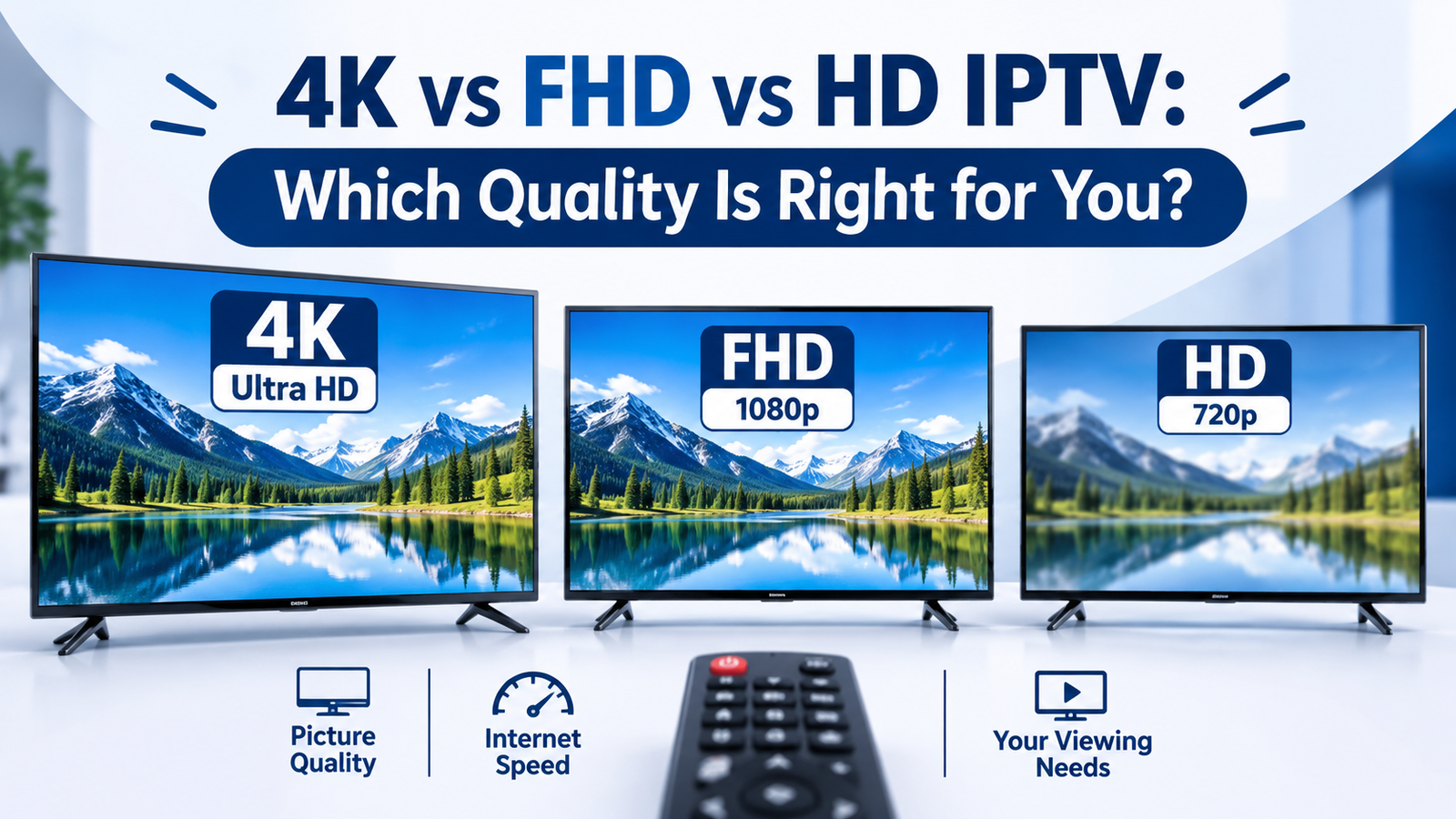
Before comparing these options, it is important to understand what they mean. These terms describe video resolution, which refers to the number of pixels used to create an image. More pixels can provide more detail and a sharper picture when the content and display support that resolution.
Here is a simple comparison:
Picture Quality | Resolution | Total Pixels |
HD | 1280 × 720 | 0.9 million |
FHD | 1920 × 1080 | 2.1 million |
4K UHD | 3840 × 2160 | 8.3 million |
As you can see, 4K offers four times as many pixels as FHD. FHD also provides more detail than standard 720p HD.
However, higher resolution does not always mean a better viewing experience. Your internet connection, streaming source, and device also play an important role in IPTV picture quality.
4K IPTV, also known as Ultra HD or UHD, offers a resolution of 3840 × 2160 pixels. It provides more image details, sharper edges, and a clearer viewing experience compared to lower resolutions.
This quality is especially useful for people who have large 4K televisions and enjoy watching movies, sports, and other content on a bigger screen.
Some important benefits include:
FHD IPTV stands for Full High Definition IPTV. It offers a resolution of 1920 × 1080 pixels, commonly called 1080p.
For many viewers, FHD IPTV is a practical choice because it provides clear pictures without requiring as much internet bandwidth as 4K.
It works well on most modern televisions, laptops, and other streaming devices.
Here are some reasons why many viewers prefer FHD:
FHD IPTV is a suitable option if you want good picture quality without putting too much pressure on your internet connection.
It is also a good middle ground for households where several people use the internet at the same time.
HD IPTV usually refers to 720p resolution, which offers 1280 × 720 pixels. It provides better picture quality than standard definition and works well for viewers who do not need the highest resolution.
HD IPTV is useful for smaller screens, older televisions, and situations where internet speed is limited.
Some common benefits include:
Although HD does not offer the same level of detail as higher resolutions, it can still provide a good viewing experience.
If your internet connection is not very fast, choosing HD instead of 4K may help reduce buffering and interruptions.
Now that you understand each quality level, let’s compare them directly.
Feature | HD IPTV | FHD IPTV | 4K IPTV |
Resolution | 720p | 1080p | 2160p |
Picture Detail | Good | Very Good | Excellent |
Internet Needs | Lower | Moderate | Higher |
Screen Size | Small to medium | Small to large | Best on large screens |
Device Support | Wide | Wide | Requires 4K support |
Best For | Everyday viewing | Daily entertainment | Premium viewing |
The biggest difference between 4K vs FHD vs HD IPTV is the amount of detail each resolution can display.
HD is a practical option for basic viewing, FHD offers a balance between quality and internet usage, and 4K provides the highest level of detail when all your equipment supports it.
The right choice depends on your television, internet speed, and personal preferences.
Here is a simple guide:
For most households, FHD is a good starting point. You can switch to 4K when your device, internet connection, and available content support it.
Choosing the right resolution is only one part of getting a better viewing experience. A few simple steps can also improve your IPTV picture quality.
Run a speed test on your streaming device. Make sure your connection can handle the selected video quality.
Check whether your television, Android box, Fire TV device, or other streaming equipment supports your preferred resolution.
If the same channel is available in HD, FHD, and 4K, choose the version that works best with your setup.
Using an updated IPTV player can help with compatibility and playback performance.
Large downloads, online gaming, and multiple streaming devices can affect your available bandwidth. Try to manage these activities when watching high-resolution content.
Remember, good IPTV picture quality depends on the complete setup, not just the resolution shown in the channel name.
Some of the most asked questions with their answers are given below:
Yes, 4K IPTV offers four times the pixels of FHD and can display more detail. However, you need a compatible 4K screen, suitable content, and a stable internet connection to enjoy the difference.
FHD generally needs a moderate internet connection. Around 10–15 Mbps is a useful starting point for one stream, although actual requirements vary.
You can receive a 4K stream on some compatible streaming setups, but a Full HD television cannot display native 4K resolution. The picture will be limited to the screen’s supported resolution.
Buffering can happen because of slow internet, network congestion, an unstable Wi-Fi connection, or problems with the streaming source. Try a wired connection or switch to FHD to see if playback improves.
FHD IPTV is a good option for everyday viewing because it offers clear picture quality without the higher bandwidth demands of 4K. HD is also suitable when your internet connection is limited.
Choosing between 4K vs FHD vs HD IPTV becomes easier when you understand what your television and internet connection can handle. Each option has its own benefits, and the best choice is the one that gives you clear pictures and smooth playback.
HD works well for basic viewing, FHD offers a balanced experience, and 4K delivers more detail for viewers with compatible equipment.
Ready to enjoy a better IPTV viewing experience? Explore Smart4K IPTV Panel and discover a reseller panel designed to help you manage customer subscriptions and reseller credits. Get started with a suitable package, manage your customers with ease, and take your IPTV reseller business to the next level. Choose Smart4K IPTV Panel and make quality entertainment part of your next business opportunity!
Message Us